Ground Investigation at Central Park, Darlington
Targeted ground investigation supporting the design of a proposed access road within the Central Park brownfield regeneration scheme.
- Ground Investigation
- Phase 2 Site Investigation
- Geotechnical & Geoenvironmental Assessment
2018
Project Overview
Supporting access-road design and contaminated land assessment within one of Darlington’s most significant brownfield regeneration schemes.
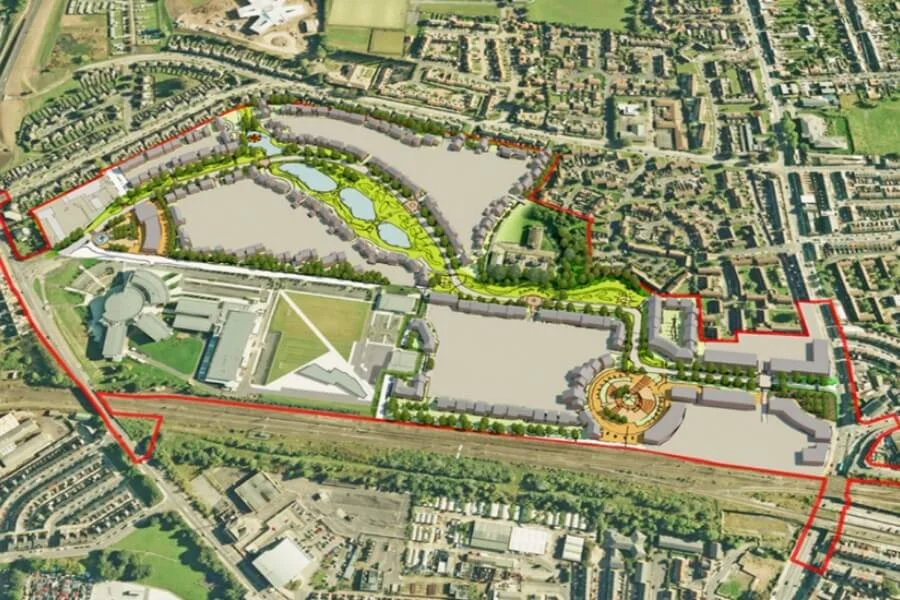
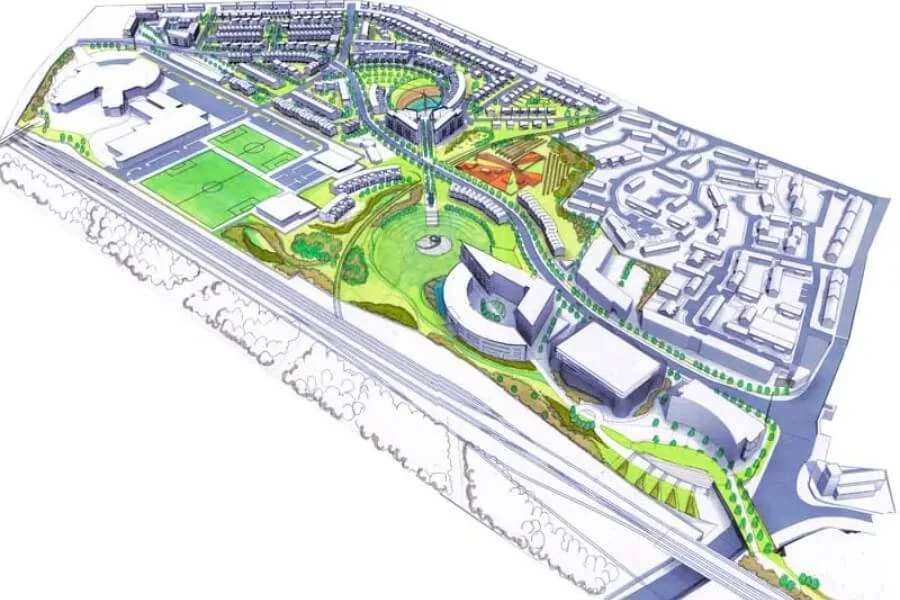
Central Park is a 30-hectare brownfield regeneration site adjacent to Darlington railway station and the East Coast Main Line. The wider development brings together new homes, education, science and innovation facilities, commercial development and public space across land shaped by a long railway and industrial history.
As part of the continuing regeneration, Darlington Borough Council commissioned Northpoint to undertake a targeted ground investigation for a proposed access road associated with Network Rail land.
Working in partnership with Middlesbrough Council, Northpoint acted as Principal Contractor and specialist geotechnical and geoenvironmental consultant, delivering the investigation to support both engineering design and land contamination assessment.
The commission required an integrated understanding of ground conditions, pavement design requirements and potential contamination associated with the site’s former railway use, providing the project team with a clearer basis for design and construction planning.
Client Requirements & Site Challenges
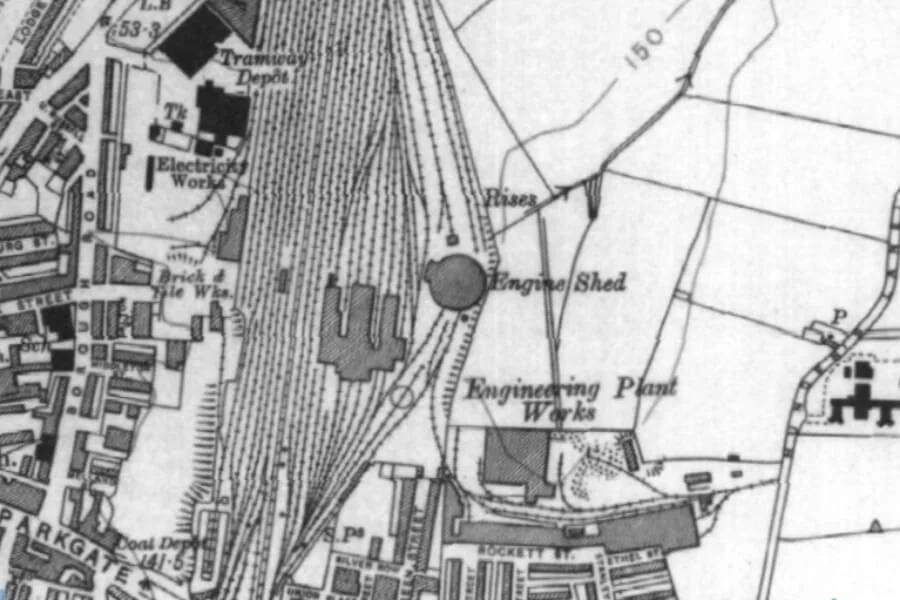
The proposed access-road corridor crossed former railway land historically associated with an engine shed, turntable and numerous rail sidings.
Previous investigations had identified two localised contamination hotspots, while variable ash-rich Made Ground and the potential for further isolated contamination created uncertainty for both engineering design and construction.
Darlington Borough Council required a targeted Phase 2 Site Investigation to establish the ground and groundwater conditions beneath the proposed route, provide geotechnical parameters for road and pavement design, and define the extent of the previously identified contamination.
The investigation also needed to assess wider land contamination and materials-management risks, including the classification and disposal of excavated soils.
Northpoint therefore developed a proportionate investigation strategy that addressed both the geotechnical and geoenvironmental requirements of the proposed works within a single coordinated programme.

Our Ground Investigation Approach
Northpoint delivered a targeted programme of ground investigation comprising seven mechanically excavated trial pits and six dynamic sampling boreholes.
The boreholes were positioned around the previously identified contamination hotspots to define their lateral extent and determine whether contamination had migrated beyond the known locations.
Representative soil samples were selected for both geotechnical and environmental laboratory testing. The testing programme included:
strength and classification testing to support pavement design;
chemical analysis to assess potential risks to human health;
asbestos screening;
preliminary waste-classification testing to inform the handling and potential disposal of excavated materials.
By integrating the geotechnical and geoenvironmental requirements within a single proportionate scope, Northpoint provided the project team with the information needed to inform pavement design, assess contaminated-land risks and plan the management of excavated materials.

Ground Conditions & Investigation Findings
The ground investigation encountered ash-rich Made Ground over generally firm to stiff natural clay.
Geotechnical testing established an equilibrium California Bearing Ratio (CBR) value of 2.5%, providing a defined ground-strength parameter for pavement design. The laboratory programme also provided concrete-classification information to inform the specification of concrete in contact with the ground.
Additional boreholes positioned around the two previously identified contamination hotspots indicated that the affected areas remained confined to their known locations, with no evidence of migration beyond the recorded areas.
Laboratory testing did not identify elevated contaminant concentrations against the adopted commercial land-use screening criteria, and no asbestos was detected in the samples tested.
The investigation also provided preliminary waste-classification information to support the planning of soil handling and potential off-site disposal.
Results & Deliverables
Northpoint documented the findings in a Ground Investigation Report issued in December 2018.
The report was prepared by a Chartered Geologist and Chartered Scientist (CGeol, CSci, FGS) and approved by an Incorporated Engineer and Member of the Institution of Civil Engineers (IEng, MICE, FGS), providing professionally qualified technical oversight without identifying individual team members.
Given the variable nature of the Made Ground, Northpoint recommended a construction-stage watching brief undertaken by a qualified geoenvironmental engineer. This provided a proportionate control for any unexpected materials encountered during earthworks while reflecting the generally reassuring results of the investigation.
The report gave Darlington Borough Council and the wider project team defined technical inputs for pavement design, concrete specification, contamination management and materials planning. By combining targeted intrusive investigation, geotechnical testing and contaminated-land assessment within one coordinated scope, Northpoint reduced uncertainty around the proposed route and provided a clear basis for subsequent design and construction planning.
Supporting Brownfield & Infrastructure Development
Former railway and industrial sites can present complex combinations of variable ground conditions, buried infrastructure and contaminated land risks.
Northpoint provides targeted ground investigation, Phase 2 Site Investigation and geoenvironmental assessment to define these constraints and provide clear, practical information for engineering design, remediation and construction.
Our teams support brownfield redevelopment and infrastructure projects across the UK, particularly throughout the North East and Yorkshire, combining intrusive investigation with geotechnical and geoenvironmental consultancy to help project teams understand ground risk and make informed decisions.
Planning infrastructure or redevelopment on brownfield land?
Northpoint can develop a proportionate Ground Investigation strategy tailored to the ground conditions, development proposals and technical requirements of your site.