
Seal Sands & Port Clarence: Abnormal Load Geotechnical Assessment
Assessing carriageway capacity, ground settlement and buried-culvert risks along a 6 km industrial transport route in Teesside.
- Geotechnical Engineering
- Highway & Pavement Assessment
- Settlement & Load Transfer Analysis
2018
Project Overview
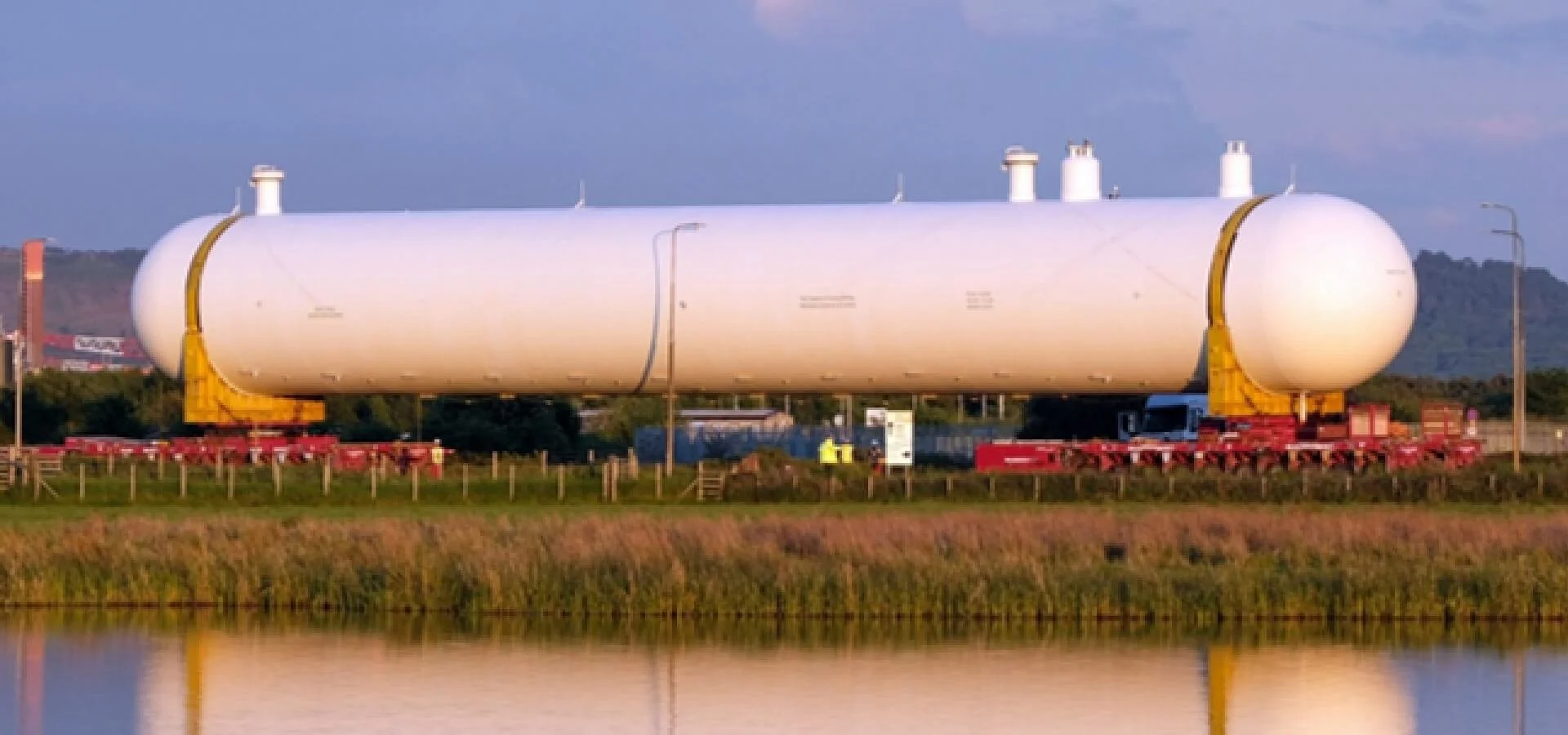
Stockton-on-Tees Borough Council commissioned Northpoint in 2018 to assess whether the existing carriageway and underlying ground along a 6 km route between Wilton Engineering at Port Clarence and ConocoPhillips at Seal Sands could accommodate a defined abnormal-load transport arrangement.
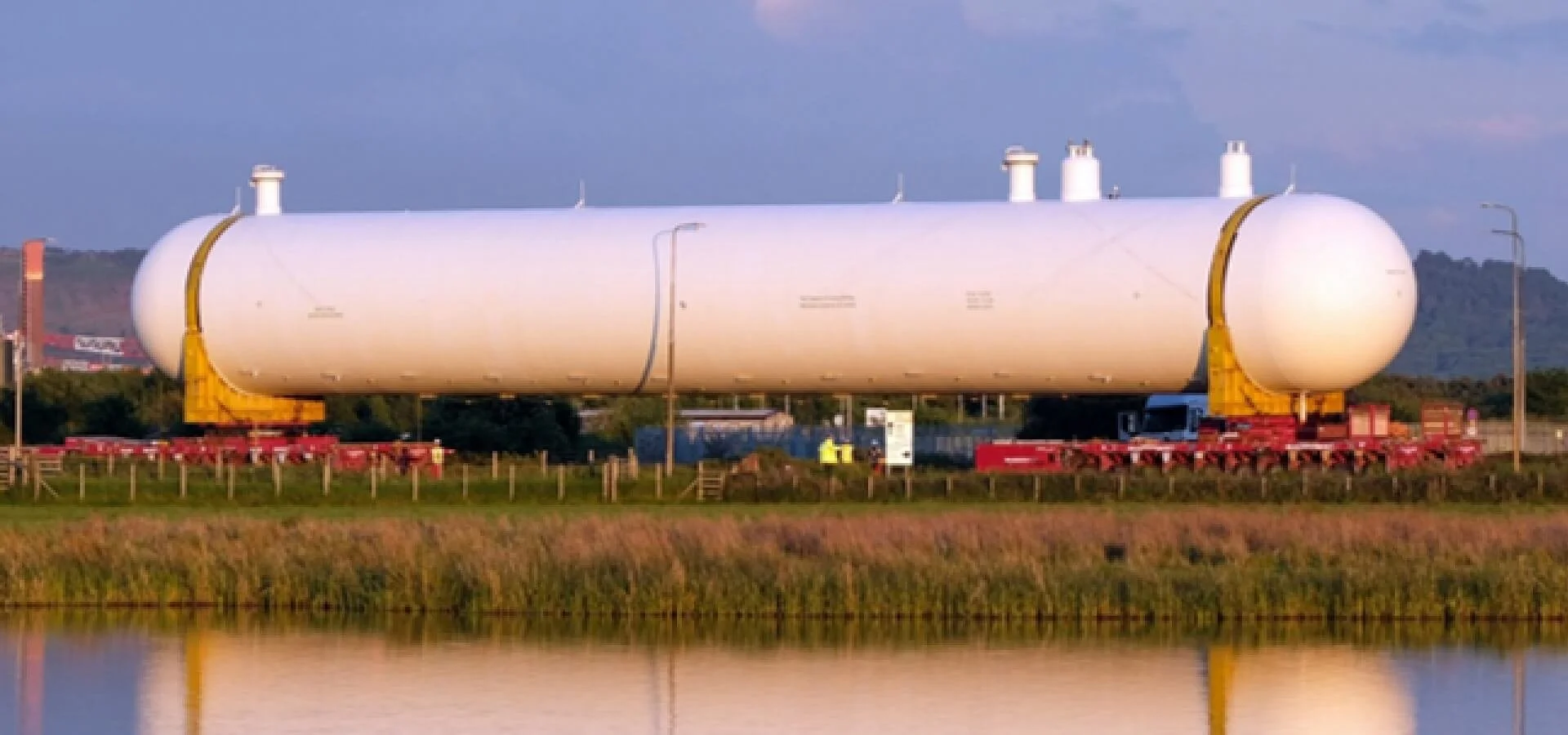
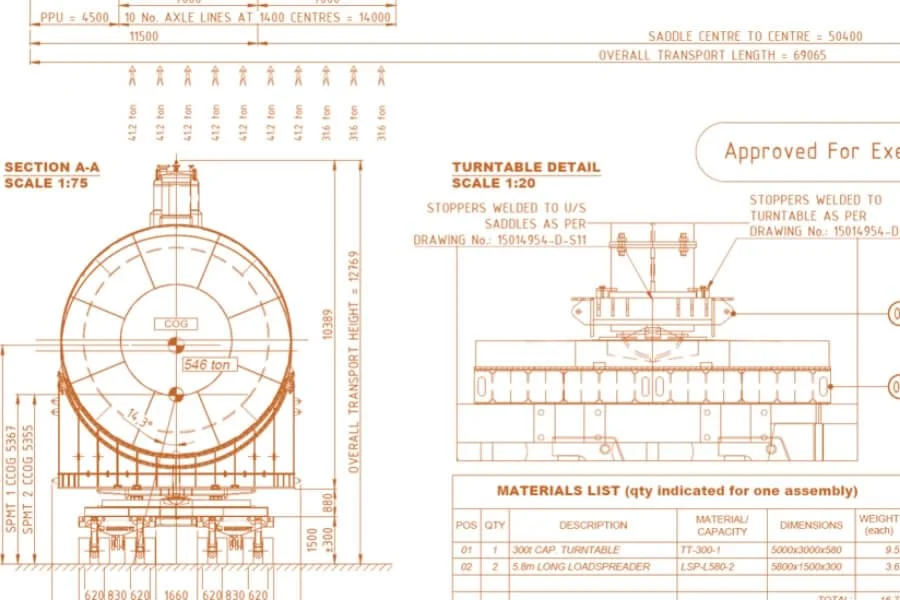
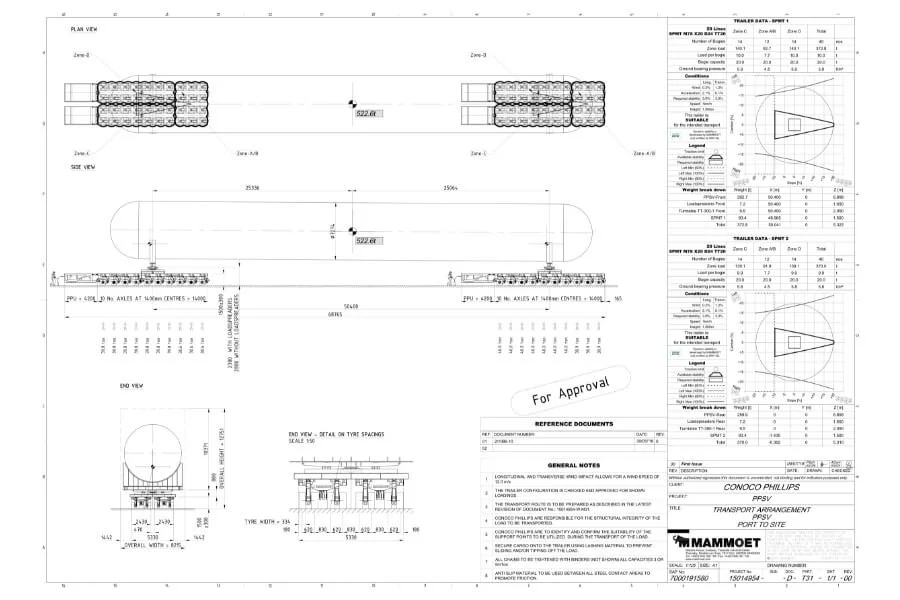
The project was publicly described as the movement of an approximately 700-tonne abnormal load. The engineering information identified the propane storage pressure vessel itself as weighing 546 tonnes, divided between 274.5 tonnes at the front support and 271.5 tonnes at the rear.
When the self-propelled modular transporters, turntables and load spreaders were included, the complete loaded transport arrangement weighed approximately 769.4 tonnes.
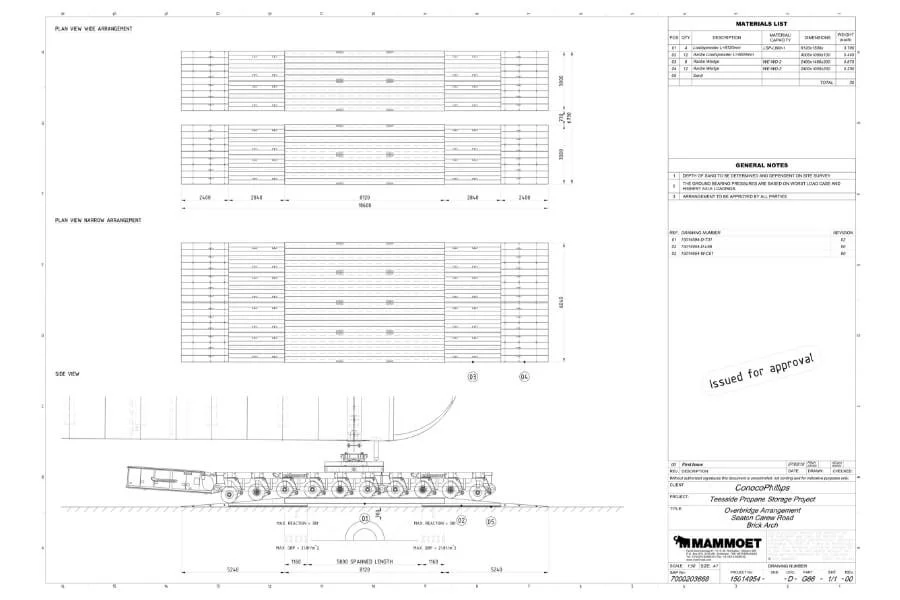
Northpoint assessed wide and narrow transport configurations together with the local overbridge arrangement required at a brick culvert crossing. The assessment was applicable to repeated movements using the defined transport arrangement rather than being limited to one vessel movement.
Middlesbrough Council’s Laboratory Services completed the intrusive ground investigation along the route. Northpoint interpreted the investigation data, assessed the response of the pavement and underlying ground to the proposed loading, and identified where protective measures were required.
Client Requirements and Challenges
The proposed movement introduced exceptional temporary loading across a route, rather than at a single prepared working area. The evidence therefore had to account for changes in carriageway construction, sub-base and underlying soils over approximately 6 km.
The route also crossed buried services, pipes and a brick culvert identified for specific assessment. These features could respond differently from the surrounding carriageway, so a conclusion based only on general pavement condition would not provide the highway authority with the location-specific assurance it required.
The client required clear answers to three practical questions: whether the existing carriageway construction was adequate; how much settlement could occur as the abnormal live load was transferred into the ground; and where local measures were needed to protect buried structures.

Our Approach and Methodology
Northpoint reviewed the available evidence from the intrusive ground investigation completed along the route. The principal investigation comprised 36 road-core test locations and two trial pits within the A178 central reservation, together with available borehole records. Most completed boreholes extended to approximately 3.0 metres below ground level.
This information was considered alongside the complete loaded transport arrangement and its wide and narrow configurations. Northpoint assessed the adequacy of the existing pavement and sub-base before calculating the immediate settlement of the underlying ground as the wheel loads were transferred through the carriageway.
The assessment also considered a local overbridge arrangement at the brick culvert crossing. This represented a more sensitive condition than the surrounding carriageway and therefore required a separate load-transfer assessment.
By assessing the route and each relevant transport configuration, Northpoint could distinguish between sections where the existing carriageway was adequate and the local condition where targeted structural protection was recommended.
Results and Deliverables
Northpoint delivered a Geotechnical Assessment Report covering pavement and sub-base adequacy, ground response and immediate-settlement calculations for the wide, narrow and overbridge transport arrangements.
The calculated immediate settlement was:
0.08 mm for the wide transport configuration;
0.07 mm for the narrow transport configuration; and
0.09 mm for the overbridge arrangement.
The maximum predicted immediate settlement was therefore 0.09 mm, comfortably below 5 mm. Northpoint concluded that the existing carriageway construction and underlying ground conditions were generally adequate for the proposed loading.
At the assessed brick culvert crossing, Northpoint recommended overbridging to limit the load transferred to the underlying structure. This provided targeted protection at the most sensitive assessed location without requiring intervention along the entire route.
The work was led by a Principal Engineer holding BSc (Hons), MSc and PGCE qualifications, together with CGeol, CSci, FGS and MSEE professional credentials.
The subsequent transport programme involved six pressure vessels. Northpoint’s assessment contributed to the technical planning of those movements by confirming general route adequacy, quantifying predicted settlement and identifying where additional protection was required.
Supporting Abnormal and Heavy-Load Movements
Northpoint supports highway authorities, transport planners, asset owners and contractors with geotechnical assessment for abnormal-load movements, heavy plant and other concentrated temporary loads. Our engineers interpret ground investigation and pavement data, assess settlement and load transfer, and define proportionate measures for sensitive structures and variable ground.
Planning an abnormal or heavy-load movement?
Northpoint can assess carriageway capacity, ground settlement and risks to buried structures, providing the technical evidence needed to plan your route with confidence.